
Labor Day Weekend to Remember...

 We got there at an excellent time just right before the event opened and was able to sample great food and wine from most of the vendors. There were a lot to choose from and we did our best to hit as many as we could before the shows started. First stop was the Borders Grill truck ("Two Hot Tamales"?!) and had a carne asada taco topped with fresh avocado guacamole (excellent!). From there, we sampled honey vanilla bean yogurt from Voskos Greek Yogurt (two thumbs up!), and then off to various wine samplings.

 Then we headed off to the Downtown Stage for Chef Mark Peel and Chef Suzanne Goin demo on "Farm to Table". They demoed cooking items brought in by local farmers who are regular vendors of the Santa Monica Farmers' Market.
  Got a chance to speak with Roger after his cooking demo both at the signing station, and by the Cooking Channel truck. Very easy person to speak with and he made it felt like I was speaking to a long lost buddy from my high school days. We started casually talking about how good the Caramella Ice Cream was that The Cooking Channel truck was handing out, and the deliciousness of the Bahn Mi sandwiches from the Nom Nom truck (Chris and I shared a pork Bahn Mi -very tasty!)
Then, we got onto some heavy discussion about some serious talk. Roger is a very down-to-earth kind of person. I asked him about his future projects and he asked a little about myself. By the way, he's also into music and apparently he's got a band of his own - go figure...
I know what you're asking - "What are his future projects?!" Well, you'll just have to wait but I guarantee that it'll be worth waiting for...
 A little bit more samplings (like the KyoChon Soy Garlic Chicken - yum!) before we headed to back to the Hollywood Stage to see Aida Mollenkamp from Food Network's "Ask Aida" and The Cooking Channel's "Foodcrafters" shows. She's a very beautiful lady, especially in person (reminds me of a young Julia Roberts...) She too was very easy to speak with and quite a knowledgeable person when it comes to food.
  Off to more free tastings with Don Francisco's coffee and their Hawaiian Hazelnut blend (quite delicious), Korean drinks (sweet and delicious but quite potent...), and Korean mungbean pancakes (out of this world...) Now we're ready for Tommy Tang's demo - Thai Risotto?! Chris asked him if this was a new dish and Tommy confirmed that he just made it up... He's quite the comedian on stage but I think he's quite the soft spoken individual off stage. Of coarse, this was the first time that I've really had a chance to speak with him in person so first impressions might not be all that acurate. All in all, he's also a pleasant person to meet. He mentioned that he's going back to Thailand to work on the next season of his show on PBS... I suspect that he's also going back to continue his work with the Tsunami Children Foundation.
 Chris and I also met the owner of SedThee Thai Eatery and got a chance to sample their Thai Chicken Curry before they ran out. Apparently, they ran out the first time and had to make more - it was that popular... They're located on 239 North Brand Blvd, Glendale, CA 91203 so if you're in their neighborhood and are hungry for Thai food, I highly recommend this place. Tell them Sam and Chris sent you... (they might say, who?!)
I was a little bit disappointed that I didn't get a chance to meet her in person, perhaps chat with her a little and get a picture taken with her; hand her my business card and say "Zooey, next time that you're in the market for a caterer, look me up..." Hey, it could happen!
 |
| Heirloom Tomatoes Salad on mixed greens with fresh basil, drizzled with strawberry balsamic vinegar and olive oil |
 |
| Grilled ribeye steak with adobo spice rub on roasted baby potatoes and grilled vegetables |
To Market, To Market, To Buy a Fat Pig...

If shoppers want to buy really fresh salad greens or perfectly ripe raspberries or a culinary surprise of the best sort, they'll want to find an old-fashioned market -- like a farmers' market or a vintage market house -- with a variety of vendors.
From the Lexington Market in Baltimore (which has some of the best crab cakes in the world) to the small but exotic Hilo Farmers' Market on the Big Island of Hawaii (full of fruits and vegetables that aren't always familiar), this tour of a few outstanding markets will delight and amaze. The variety of products and people keep the program as juicy and tender as an August peach in North Carolina.
Produced by Rick Sebak of WQED Pittsburgh, TO MARKET TO MARKET TO BUY A FAT PIG is the latest in a diverse set of public television specials that identify and applaud some often overlooked aspects of American culture. In 2005, Sebak celebrated burial places in A CEMETERY SPECIAL; in 2004, he pointed out wacky architecture in A PROGRAM ABOUT UNUSUAL BUILDINGS & OTHER ROADSIDE STUFF. Several of his works, including A HOT DOG PROGRAM, AN ICE CREAM SHOW and GREAT OLD AMUSEMENT PARKS, have become summertime traditions on PBS stations across the country.
"This time we wanted to talk to buyers and sellers, foodies and farmers. We wanted to check out the scrumptious eccentricities of American markets," says Sebak. "We don't include some of the major markets that are celebrated regularly on cable networks. We tried to go instead to unexpected locations and less familiar food spots, like the Western North Carolina Farmers Market on the outskirts of Asheville. And we spent a whole day amid the international abundance that makes Your Dekalb Farmers Market in Decatur, Georgia, totally unforgettable.
"Our only regret is that we have but an hour of time to squeeze in all the great places we visited," Sebak continues. "They're all different and distinctive. Sometimes I think the only factor that links these places together is the word 'market' itself."
The film features an early morning visit to the Santa Fe Farmers' Market, which sprouts up in a parking lot each week and where shoppers can find beautiful baby bok choy, lean local bison meat, homemade baked goods and raspberry-and-red-chile jam. Farmer Matt Romero laughs when he admits that the market's customers are unpredictable. "You'll see people there who really love fresh food who don't make very much money, and you'll see millionaires, shopping side by side," he says. "And there's no way to tell them apart, so we treat them all equal."
Sebak and his crew also go to Cleveland where the West Side Market has been a major landmark since 1910. Some people assume that the magnificent vaulted structure was once a train station, but it was designed and built as a market house; there are architectural details in sculpted stone that let passersby know that inside there are leafy green vegetables, live seafood and fresh meat. Customers appreciate the history that comes with the building. Lisa Cutner says, "It's sort of like home because it's been here forever. I can remember my grandfather used to bring us down here when we were little, and it pretty much looks the same."
The program also includes a stop at the Central Market in Lancaster, Pennsylvania, which may be the oldest continually operating market space in America -- it has records that date to 1742. "I also loved Lancaster," says Sebak, "because that's where we met Anne Wilson, who sells nothing but celery. And people crave it because it's a local specialty. You can also get ground-on-the-premises horseradish there that's excellent too. I'd go back for more of that any day, although Central Market is open only on Tuesdays, Fridays and Saturdays."
TO MARKET TO MARKET TO BUY A FAT PIG also includes some shopping at the Wednesday market in Santa Monica, California, which is just a few blocks from the Pacific Ocean. From 8:30 a.m. until 1:30 p.m., farmers from miles around come to meet their customers and sell their tastiest and timeliest fruits, vegetables and flowers. Leyla Coban, a young French woman who sells asparagus and artichokes there, says, "There's a certain energy in the farmers' market. It connects you to your roots. There's a special joie de vivre."
That "certain energy" is perhaps what makes markets such satisfying places for socializing, as well as shopping. "People talk to each other in markets," says Sebak, "and we were happy to meet and talk with so many people who helped us capture some of the joys and surprises of these places. As people continue to learn that 'fresh' and 'local' are important qualities, we hope this show might inspire a visit or two to a market in your neighborhood."
Underwriters: Public Television Viewers, PBS and Corporation for Public Broadcasting.
This video is available for rental through Netflix, or you can purchase it directly from the PBS on-line shopping page.
Long Beach Sunday Market Report - August 22, 2010


"What's in a name.?..."
With this change, I'm also thinking about changing the name of this blog from its current generic name "Mise En Place" to a more appropirate one called "The Conspiring Gourmets". The name change of this blog site was primarily due to my search of Mise En Place on Google displaying a myriad of results. Plus I want to have a blog site title that corresponds with the company name to make it easier for everyone to remember.
There's really no effect to our readers as we are going to continue providing more information about what's happening in the culinary industry as well as food in general.
Long Beach Sunday Market Report - August 15, 2010

OC Jerky is a distributor of one the most well-known and respected name in the Beef Jerky industry and that is Jerky Hut. Every product that they provide is made of the highest quality meats and guaranteed to be the freshest and most flavorful to the last bite.
Their Jerky products are not dehydrated like most Jerky product, but smoked for a full bodied taste which is DELICIOUS and NUTRITIOUS as a treat or snack. Because of this process, you can expect their Jerky to have some meat on it and be full of flavor.
From seed to fruition
 I remember visiting the provinces of the Philippines when I was quite young. I used to love spending time at my grandparents' farm in Bicol and picking corn straight from the field and toasting it just a few steps away by the side of the house. I also remember gorging ourselves with ripe mangos that we plucked from the trees behind my Aunt's house in Zambales.
I've tasted fresh produce and have compared it to the produce bought at large super markets. There is just no substitute for freshness. The fact of the matter is that most produce, if not all of them, start to die as soon as they get picked. Some die slower than others but overall that they start losing their freshness.
The produce that is bought in large super markets sometimes travels for several days prior to reaching the store. To circumvent this issue and prolong the life, the produce is picked before they are ripe and some are injected or introduced to chemicals and gasses to simulate freshness. This is the reason why local farms are important to the production and distribution of freshness.
Many urban farms are sprouting up around the Long Beach area, and this is a good thing. More local farms means less travel time for the produce. This means more fresh ingredients to be had. Not only is there freshness being produced here but also green; and by "green" I mean environmentally friendly. Most of the urban farmers are environmentally conscious and are using natural means of reducing and eliminating garden pests. I've learned a technique called interplanting from one of the farmers where the combination of certain plants would deter bugs away from other plants. One example that he gave was to plant basil around tomatoes. Basil, an annual, is also successful in distracting bugs away from tomatoes so they are a great natural pesticide for tomato plants.
Sasha Kanno, the Director at Wrigley Gardens, is working on developing an amazing local farm in Long Beach which would help provide local jobs, as well as a financial benefit to the City. It will promote a great source for healthy and fresh local ingredients to be available for families and local food establishments. I encourage you to view the video and get involved. This is much needed resource within the community so please donate to the project.
Sasha Kanno is a floral designer by trade but has also been a backyard farmer since childhood. She is the Director of Wrigley Garden; a community garden started in the spring of 2009 with its 40 plots, 14 hens and a small orchard she has fed many hungry mouths. She is also one of the founders of the Wrigley co‐op food exchange which harvests, shares and preserves the excess produce from our city.
Farm Lot 59, a biointensive mini farm is a new venture but she is dedicated to its success: “I am already growing amazing food and this farm will help me take it to the next level. This is the direct connection to the food that nourishes us all throughout our lives. Long Beach use to be full of agriculture, let's get back to our roots. Our children should be able to have wonderfully fresh food while growing up in the city.”
SIP at the Renaissance Hotel, Long Beach

The lounge greeted us with an inviting and relaxing atmosphere full of people sharing a common interest in food and spirits. As we headed further into the crowd and to the cheese station, I met up with Andrew Gruel and Dave Anderson of Seafood for the Future to say, "hello" and chat for a bit, then indulged in some blue cheese, date, and crostini. Delish!
 Polly told us about the braised beef sliders so Didi and I excused ourselves to head outdoors where they were serving these delightful, delectable goodies. They were boneless short ribs braised in Ballast Point Calico Amber Ale, then served on sliced dinner rolls with caramelized onions and sweet hot mustard. The whole thing just melts in my mouth and I couldn't have just one. It was a big hit amongst the crowds as I heard of claims for seconds and thirds. One of the guests told me that they had six already, and I found him hanging around the slider station, perhaps contemplating on a seventh helping...
I found a purpose....
I was really ecstatic to have realized the dream of going to culinary school, and really started to move forward my passion. In school, I was energized and I started realizing that this was IT! This is how people become alive when they are faced with their destined dreams realized. Cooking and learning about proper food handling, production and presentation kept me even more motivated to do more. The more I did, the more I learned about the industry and the business of food. Consequently, the more I learned about the food industry, the more I realized that there's a problem with a lot of the processed foods that I used to eat. I started searching on the Internet for more information, read books about nutrition, spoke with friends and acquaintances who were registered nutritionists and dietitians, and watched segments on the Green Channel for anything regarding agriculture, cooking, food production, and waste management. I also made a point to watch the movie documentaries "Food Inc.", "We Feed The World", and "The Cove"; and I was disgusted by what I saw and heard.
In my recollection growing up, most of the Grandpas and Grandmas died of old age, and never heard of Diabetes, Celiac Disease, nor Attention Deficit Hyperactivity Disorder. They all ate natural foods now considered to be unhealthy - full of saturated fat & carbohydrates. Today, three out of five people I know are diabetic, and I know of at least two or three people suffering from gluten intolerance.
 Wednesday of this week, I had the opportunity to attend a presentation at the Houssel's Forum of the Long Beach Memorial Medical Center. It was the Long Beach Healthy Kids Summit presented by Leadership Long Beach, Class of 2010.
Walking into the room, I was a little bit intimidated especially not recognizing anyone. I spotted Chef Paul Buchanan sitting at the front table so I headed his way. Halfway there, I saw Chef Michael Poompan of the Renaissance Hotel, and we shook hands and made our way to where Paul was sitting. After a brief chat with Paul, I saw Kelli Johnson, Long Beach Sunday Market organizer for California Heights. As I was about to sit down, I was surprised and pleased to see one of my Kitchen Academy classmates, Devin Welch. Devin is a registered dietitian who has done a lot of work with the Long Beach Unified District and introduced me to Cecilia Slater. I was in good company.
Chef Paul Buchanan of Primal Alchemy was the first presenter and he shared personal stories of his experiences teaching 4th and 5th grade kids the differences between good food and bad food, providing them with the understanding of where food comes from and reading food labels through his involvement with the Days of Taste Program created by the American Institute of Wine and Food. He presented a video that showed family members, both kids and parents learning to change their food purchasing and eating habits, as well as engaging in more family oriented activities. It was a great testimony that change can happen, and that families would benefit greatly from the change.
Other presenters included Helene Calvert, M.D. - Health Officer for the City of Long Beach who talked about the obesity epidemic in Long Beach; Elisa Nicholas, M.D., MSPH of the Children's Clinic for the Long Beach Alliance for Food and Fitness who addressed the epidemic in further detail; Cecilia Slater - Nutritional Services Director for the Long Beach Unified District who spoke on nutrition services, opportunities and challenges in the school district; Stefan Harvey - Assistant Director at the California Center for Public Health Advocacy who addressed local and state policies; and Chef Ann Cooper "Renegade Lunch Lady" who brought perspective to the nutritional past, present, and future of school lunches.
After hearing all of the presenters, I thought to myself, "This is where I belong and this is what I was meant to do..." As a chef, I have an obligation not only to feed the hungry but also to be responsible for the health conditions that I effect for those who eat what I prepare, and the preservation for availability of our resources.
There is a definite shift in the way that people are looking at what they eat and how they eat; and yet there's still a good majority of people who are uninformed and mislead.
I feel blessed to be associated with people who are making a difference for a better and healthier future and even more excited for the opportunity in being a part of this movement.
Temecula

An aromatic bouquet and knowledgeable and hospitable staff will greet you at the door and keep you coming back to Old Town Spice Merchants of Temecula for all your spice needs.
 While in Temecula, we also visited one of our favorite cheese shops called Temecula Valley Cheese Company. It's just a quaint shop tucked behind several buildings off of Front Street on Fifth Street. Here we purchased quarter pounds of Saint Andre triple cream cheese, a sage Gouda (or was it cheddar?), and mild Stilton with lemon (which I used for today's lunch of steak salad with semi-home made dressing made with the Greek Feta spice blend from Spice Merchants).
 Owned and operated by Jeff and Shawna Smoot, this cheese shop sells about 500 pounds of cheese per week. In addition to the outright sale of cheeses, the Temecula Valley Cheese Company offer picnic basket rentals for those heading to the Wine County or for any type of outing who wish to have a selection of cheese, breads and spreads.
For information on the Temecula Valley Cheese Company, at 42072 Fifth St. in the Penfold Plaza, call (951) 693-9500.

Regardless of which shops you visit, you won't be disappointed by the variety of flavors to choose from just in this small section of Old Towne Front Street.
Mom's Pie House
 What a weekend! Didi and I spent Saturday driving up to Julian and realized that apple season doesn't really start until September so we made the day work by visiting Mom's Pie House. This is the place to go for great fruit pies. We sampled a cherry and apple pie, and ended up ordering a slice of it, as well as three large apple dumplings to take home. This place gets crowded and the line for ordering and pick up sometimes gets quite long, although the wait isn't too bad, especially for these pies.
Mom's Pie House is a full service one of-a-kind pie shop. Mom's is famous for making apple pie that would make Grandma proud. All of their pies are made fresh daily, by skilled bakers using only the finest fruit and purest ingredients available.
Mom's History
Mom's Pie House was created, from scratch, in December 1984 by Anita Nichols, "Mom" to Laurie, Teak, Erica and Jesse. She had a vision - to make a delicious, homemade pie from the already famous Julian apples. When she first opened, in the old Julian Cafe building, the bakery measured a whopping 10 by 22 feet, and had very cozy seating for two! Mom used one small electric oven for all of her baking, and peeled her own apples using a counter-mounted peeler.
Mom's flaky crusts and not-too-sweet fillings were a hit with locals and tourists alike, and a line snaking outside the door of the tiny bakery became commonplace. In the fall of 1987, Mom began to expand the bakery to include a larger kitchen and more seating. She also started baking cookies, cinnamon rolls, and other sweet homemade treats.
Twenty years of hard work later, Mom is still rolling out those flaky piecrusts in the front window, smiling at the eager, hungry faces peering in at her, and is still creating a high quality, mouth-watering, homemade pie!
A gnew look at gniocchi

Stay tuned...
Grilling and Broiling
- Hot Smoking exposes the food to smoke and heat at temperatures between 165°F (74°C) to 185°F (85°C). This is the ideal range that produces fully cooked, moist and flavorful foods. If the smoker is allowed to get hotter than 185°F (85°C), the food shrinks excessively because the higher temperatures cooks away both moisture and fat.
- Smoke Roasting or Smoke Baking is often referred to as barbecuing, pit-roasting, or pit-baking that exposes the food to smoke and heat temperatures above 250°F (121°C).
- Cold Smoking primarily is used as a flavor enhancer to foods such as protein-based items, and other food items. The food is typically cold smoked for a short period of time just long enough to infuse the smokey flavor into the food. The temperature of the smoke and heat is maintained below 100°F (38°C). In this temperature range, foods take on a rich, smokey flavor, develop a deep mahogany color, and tend to retain a relatively moist texture. They are not cooked as a result of the smoking process, however and are usually combined with other cooking techniques to achieve the desired cooking doneness.
The MOOve towards a healthier meat consumption
- Development of a direct working relationship with the source.
- Since the exchange in the transaction is between two parties, the cost of the purchase is much less. Grass fed beef averages out to be about $3 to $5 per pound compared to about $16 at Whole Food stores.
- A healthier option without the sacrifice of omitting meats from your diet (for those meat lovers).
- Personal contribution on the elimination of animal cruelty in factory farms.
As with everything, there's also some disadvantages that is important to keep in mind:
- Takes a large outlay of funds at the time of purchase especially for smaller family groups.
- Takes a large commitment of freezer storage space. A typical side of beef weighs about 250 lbs. If there are four families sharing a cow, that's approximately about 125 lbs. of meat for each.
- Some cuts might not be possible to get based on choices by other familes in the group. For example, if a family want's Porterhouse steaks, that eliminates another family from getting filet and New York cuts since both of these make up the Porterhouse cut.
If you are interested in cow pooling or cattle sharing, you'll have to search for a farmer or rancher offering this service local to your area. One rancher providing this service in Southern California is Megan McDowell of MM Livestock Co located in Wildomar, California. Along with cows, she also sells sheep. The sheep are crossbreeds of Suffolk and Dorper, and the cows are primarily Angus/Semmintal. The meats are Certified Naturally and Humanely Raised, and are U.S.D.A. inspected, graded and processed . They are also hormone, steroid and antibiotic free.
Roasting and Baking
Roasting and baking are two types of cooking techniques using the dry heat method. They are very similar in that they use dry heat (either from a flame, the oven, or other heat source) to cook the food. The difference is that the food is kept whole during roasting, and typically involves a browning process called Maillard Reaction (pronounced mī′yär rē′ak·shən) prior to the actual roasting of the food. In contrast, the baking process are done with individually portioned items and bypasses the browning of the food before baking.
Since this method of cooking uses heated air circulating around the food, it is important to keep in mind that the fattier the food item is being roasted, the more moisture it will retain during cooking. Leaner meats like poultry and today’s cuts of pork have a tendency of drying out especially if the meat is even a little overcooked. A couple of ways to remedy this for leaner meats is to either inject them with seasoned liquid such as a brine mixture or stock, or soak them in a brine solution (brining) prior to cooking.
Brining:
Brining is a process of soaking food items in a liquid solution that includes water and salt as its basic ingredients. In the past, brining was done to preserve meats by extracting moisture to extend shelf life and prevent the meat from spoiling. Since the advent of mechanical refrigeration, this process has been abandoned by almost all meat processors.
Today, brining is used primarily to add flavor and moisture to the food prior to cooking. This will often be referred to as “flavor brining”.
(See the article by Julia Collin on The Basics of Brining)
Maillard Reaction:
This browning process is a very important step in roasting foods, especially meats; and is often referred to as "searing". It intensifies the flavor of the food and adds to the presentation during serving.
The maillard reaction is achieved when amino acids react with a reducing sugar when heat is introduced. It is named after Louis-Camille Maillard, the chemist who first introduced it in the 1910s while attempting to reproduce biological protein synthesis.
The maillard reaction occurs at temperatures 285°F (140°C) or above and can be done over a stovetop or in the oven. For this reaction to take place there needs to be three factors present – High heat, low moisture levels and high alkaline conditions.
Ø On the stovetop – The cooking vessels ideal for this procedure are made of stainless steel materials.
1. Heat the cooking vessel prior to adding the oil (to gauge the temperature of the cooking vessel, check out this video from Rouxbe).
Rouxbe Online Cooking School & Video Recipes
2. Once the cooking vessel is at the correct temperature, add the oil.
3. Make sure to pat the surface of the food dry prior to seasoning and placing in the cooking vessel. Excess moisture in the surface of food will cause oil splatter.
4. Brown the food on all sides before continuing with the next steps of your cooking process.
Ø In the oven – The only requirement regarding cooking vessels using this method is that it be oven safe at higher temperatures.
1. Heat the oven to at least 285°F (140°C) for smaller sized foods, all the way up to 400°F (204°C) for larger sized food like whole turkey.
2. Place the food item in the cooking vessel large enough for the air to circulate around the food. Typically the cooking vessel is the same one that the food will be finished in. In lieu of this, roasting food should be elevated high enough from the bottom of the pan so as not to have contact with any liquid that escapes from the meat during the cooking process (remember, roasting is a dry heat cooking method). Food can be elevated using racks or chunks of vegetables like large cuts of carrots, celery, and onions. As with the stovetop method, it is important to make sure that the surface of the food is patted dry of excess moisture.
3. Place the cooking vessel with the food to be browned in the oven and brown to the desired color intensity.
4. Reduce the temperature of the oven and continue with the next steps of your cooking process.
Finishing:
Once the brining and browning process is done, the rest of the roasting process is very simple. The main points to remember here is the size of the food being roasted typically determines the temperature and cooking time.
Ø Slow Roasting uses temperatures between 200° - 325°F (90° - 160°C) and are ideal for larger cuts of meats and whole large poultry. The benefit to these temperatures is less moisture loss and a tender finished product. The muscles of the meat tend to lose a lot of water at higher temperature rates.
Ø High temperatures are typically used for roasting smaller cuts of meats like fillet mignon or strip loin that are small enough to finish cooking before the juices escape.
As with roasting, one important factor to keep in mind is that the more internal moisture the food item has, the faster it will cook.
Meats should be allowed to rest after the cooking process. This allows the moisture that is driven toward the center of the meat during cooking to be redistributed as the protein molecules relax and are able to reabsorb some moisture. As a result, less juice runs out of the meat when you cut into it. The larger the food item is, the longer the rest period. Smaller items like individually portioned steaks or chicken breasts can rest between 5 - 7 minutes, and larger items like whole turkey or beef roasts can rest between 10 - 15 minutes prior to carving.
It is also important to realize that foods continue to cook even after it is removed from the heat. This is called "carry over cooking" or "residual heat cooking". This being said, it is ideal to remove the food from the heat source prior to reaching the ideal cooked temperature, and tented with aluminum foil to take advantage of this carry over cooking stage during the rest period. Smaller items can be taken out at least 5 degrees prior to final temperature, and larger items can be taken out at least 10 degrees prior to final temperature. (Click here for a guide on how to use a meat thermometer and temperature chart for each type of meat).
We’re all conspiring to be gourmet so cook to your heart’s content!
Cooking 101
In simple terms, cooking is a process of preparing food by applying heat. The method used in applying heat varies from different countries, cultures, environment, and preference. Generally, these methods can be categorized into one of two categories – dry heat cooking methods and moist heat cooking methods.
Dry Heat Cooking:
Dry heat cooking refers to any cooking technique where the heat is transferred to the food item without using any moisture. Dry-heat cooking typically involves high heat, with temperatures of 300°F or hotter.
Ø Roasting and Baking are forms of dry heat cooking using hot dry air to cook the food.
Ø Grilling and Broiling rely on heat being conducted through the air from open flames.
Ø Sautéing and Pan-Frying are quick methods of cooking and almost similar in techniques with a few key differences. Sautéing uses a very hot pan with a small amount of fat, and the food is kept moving by tossing or flipping the food. The word sauté means “to jump” in French. Pan-Frying differs in that there’s no tossing of the food, uses slightly more fat, and slightly lower temperature than sautéing. When pan-frying larger cuts of meats, the cooking process if often finished in the oven after the surface is cooked to the desired degree. The reason for this is that the food isn’t in the pan for very long and finishing the cooking process in the oven would insure the food is cooked through on the inside as well.
Ø Deep-Fat Frying is a technique of cooking food by submerging in hot, liquid fat.
It's worth noting that cooking methods involving fat, such as sautéing and deep-frying, are considered dry-heat methods. If this seems confusing, remember that oil and water don't mix, so while fat can take a liquid form, in many ways it's the opposite of water — hence "dry" heat.
Moist Heat Cooking:
Moist heat cooking methods include any techniques that involve cooking with moisture — whether it's steam, water, stock, wine or some other liquid. Cooking temperatures are much lower, anywhere from 140°F to a maximum of 212°F, because water doesn't get any hotter than that.
Ø Poaching, Simmering, and Boiling are different moist heat cooking methods where food is cooked either in hot water or in some other cooking liquid such as broth, stock or wine. What defines each one is an approximate range of temperatures, which can be identified by observing how the cooking liquid behaves. Each one — poaching, simmering and boiling — has certain telltale characteristics:
o Poaching Cooking in liquid with a temperature ranging from 140°F to 180°F is called poaching and is typically reserved for cooking very delicate items like eggs and fish.
o Simmering is cooking in liquid that's a bit hotter than poaching — from 180°F to 205°F. Here we will see bubbles forming and gently rising to the surface of the water, but the water is not yet at a full rolling boil.
o Boiling is the hottest of these three stages is boiling, where the water reaches its highest possible temperature of 212°F. It's actually the least likely of the three to be used for cooking. That's because the violent agitation caused by the rolling boil can be too rough on food and will often damage it.
Ø Steaming is a moist-heat cooking technique that employs hot steam to conduct the heat to the food item. Once water is heated past the 212°F mark, it stops being water and turns into steam. Steaming has an advantage over methods such as boiling or even simmering is that there is no agitation involved, so it's gentler on delicate items like seafood. And because it doesn't require the food to be submerged, it avoids the loss of nutrients through leaching. It also cooks relatively quickly.
Ø Braising and Stewing are forms of moist heat cooking that are almost similar in process.
o Braising is a method of slowly cooking meat, poultry, or meaty vegetables in a heavy-based covered pan or covered casserole, using a bed of chopped vegetables, which can also include some diced ham or bacon added for flavor. Enough liquid, such as water or stock, is added to the pot to cover the meat or meaty vegetable halfway.
o Stewing is a method in which the added liquid (beer, cider, stock, water or wine) covers the meat and is heated to just under boiling point. This technique is reserved for the toughest cuts of meat which need long, slow cooking, and the meat is generally cut into chunks to aid the tenderizing process.
Choosing the Right Cooking Technique:
Using the appropriate cooking method for the type of food being prepared is a major part of the culinary arts. Tough cuts of meat like brisket or shank need to be cooked slowly, at low heats, for a long time, and with plenty of moisture. Prepared properly, these cuts can be incredibly tender and delicious. On the other hand, dry-heat methods typically involve very high temperatures and short cooking times. A piece of brisket cooked in this way — on a grill, let's say — would be tough, chewy and largely inedible. Interestingly enough, a beef tenderloin steak cooked using a slow, moist-heat method such as braising would also turn out tough, chewy and inedible — albeit for different reasons.
Humane Eating : The Humane Society of the United States
Reduce, refine and replace. Three simple actions can prevent abuses of animals occuring every day in factory farms. They’re mutilated. They're crammed into tiny cages. And they endure often-agonizing slaughter. Sadly, this is the reality for many animals on factory farms. But you can help.
Each year
Yet factory farms routinely abuse them. No federal law protects them from cruelty while on the farm, and most states exempt common agricultural practices from animal cruelty laws, regardless of how abusive.
Fortunately, all of us can help decrease their suffering by following the Three Rs:
- Reduce our animal consumption.
- Refine our diet by switching to higher welfare animal products (e.g., cage-free).
- Replace animal products with readily available vegetarian options.
For more information, please visit the The Humane Society
Supersize Me
What in the heck is a soup swap?!
 About soup swap... What it was? What it be? Why it be?
There's nothing more comforting than to sit by the fire sipping on something warm. Soup is the comfort food that translates in many different and diverse cultures and is usually made to be shared.
I remember having soup that my mom made every Christmas and New Year's eve that I automatically associate it as a standard staple of those holiday meals. Whether hearty, smooth, chunky or creamy, hot or cold, it warmed the cockels of my heart.
On January 24, 2010, the California Heights Farmers Market will be conducting its first soup swap which is intended to be an annual tradition. It would be a great opportunity to showcase your favorite soup recipes and sample and learn of new ones to add to your repertoire.
For more information about the California Heights Farmers Market Soup Swap, please visit
The Long Beach Sunday Market website.
About soup swap... What it was? What it be? Why it be?
There's nothing more comforting than to sit by the fire sipping on something warm. Soup is the comfort food that translates in many different and diverse cultures and is usually made to be shared.
I remember having soup that my mom made every Christmas and New Year's eve that I automatically associate it as a standard staple of those holiday meals. Whether hearty, smooth, chunky or creamy, hot or cold, it warmed the cockels of my heart.
On January 24, 2010, the California Heights Farmers Market will be conducting its first soup swap which is intended to be an annual tradition. It would be a great opportunity to showcase your favorite soup recipes and sample and learn of new ones to add to your repertoire.
For more information about the California Heights Farmers Market Soup Swap, please visit
The Long Beach Sunday Market website.
Grass fed or grain fed; you decide...
The next chapter…
During the past year, I've learned quite a lot more from various people about food and have shared great meals with them. The magic that food enacted this past year is that it brought us all together in such a mutually comfortable atmosphere that we soon forgot our problems and differences. Once in this atmosphere, we've reveled in the splendor of flavors and explored the taste sensations of other cultures. We've been awakened by our own eyes, noses, and taste buds to determine and solidify our own likes and dislikes, without the use of technology and without justification. All in all, we celebrated "Us"!
During the past year I've gotten involved with various passionate people that want to make a difference in the community as well as the entire world, and I have been blessed with their friendships and their enthusiasms. In my involvement with these radical thinkers, I too have sensed the increased passion within me for helping others to make this world a better place. Together, we celebrated the lives of others!
This coming year, I will turn another chapter in my life called "The Big Five Oh" and anticipate the new challenges that await me. I'm eager with anticipation and excitement for what I'm about to face but more so for where it will lead. I sense an abundance of exciting opportunities and possibilities that will only help develop my true character and better define me as the person that I truly am. I face this new chapter with traditional and radical thinking both as a learner and as a teacher; and forge on with the commitment to join in the cause to help end world hunger through education and volunteer work. This is the promise that the New Year brings and the beginning of a new chapter in my life. I eagerly welcome its arrival.

Return to Gourmet Conspiracy Website
About Me
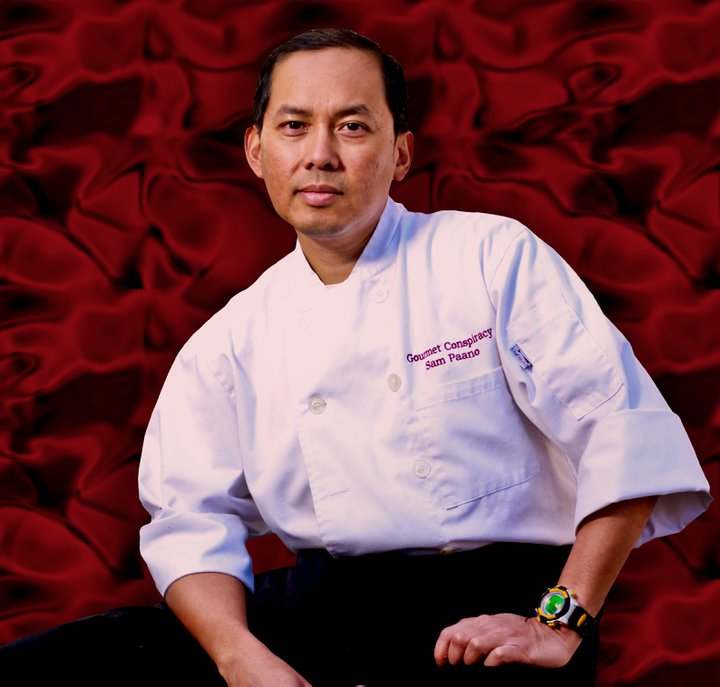
- Chef Sam Paano
- I am the co-owner and founder of Gourmet Conspiracy, a personal chef and catering service based in Lakewood, California. My objective here is to provide open communication about various types of food and their benefits towards our health. As far as my training, I graduated from Kitchen Academy in July 2007 with high honors. I have a great deal of passion about learning the cooking styles and techniques from various cultures and incorporating them in fusion dishes.

